PANASONIC NI-GWF150-R
User-Centric Redesign
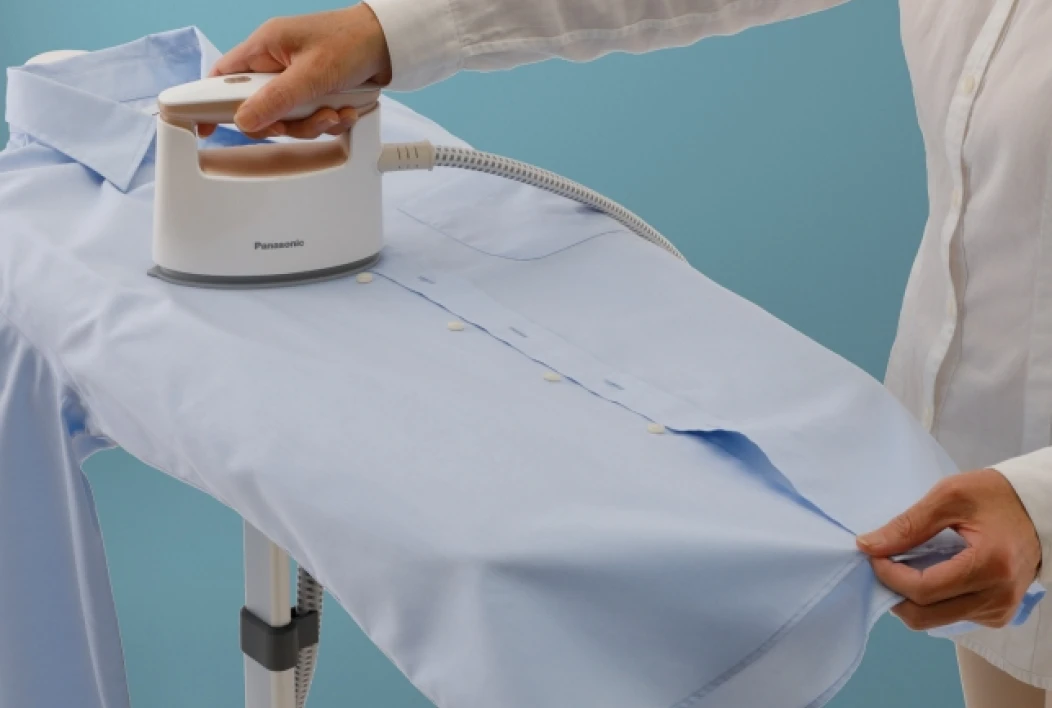
Today, garment care is a daily necessity, and vertical steamers are expected to offer quick, effortless solutions. However, when poorly designed internal heating systems leak rusty water onto expensive garments, or heavy iron heads cause severe wrist fatigue, they completely fail their primary purpose. Users are forced to compromise between the convenience of quick steaming and the safety of their wardrobe.
The redesigned Panasonic NI-GWF150 solves this problem by realigning the product with the brand's core philosophy: "A Better Life, A Better World". Fusing a re-engineered internal flow geometry to eliminate rust, an ergonomically reduced iron head volume, and an innovative expanding ironing board, this concept transforms a problematic utility tool into a seamless home ecosystem. It reclaims its place in modern living spaces, caring for garments with absolute precision and effortless grace.
Redesign to Product Design
User Research
Brand Analysis
Redesign Strategy
Functional Analysis
CAD Modeling
01PROCESS
Go to resultBackground
The core challenge of this project was translating raw user frustration into precise mechanical solutions, completely re-engineering a flawed system without losing Panasonic's DNA of reliable and effortless simplicity.
Identifying the Flaws
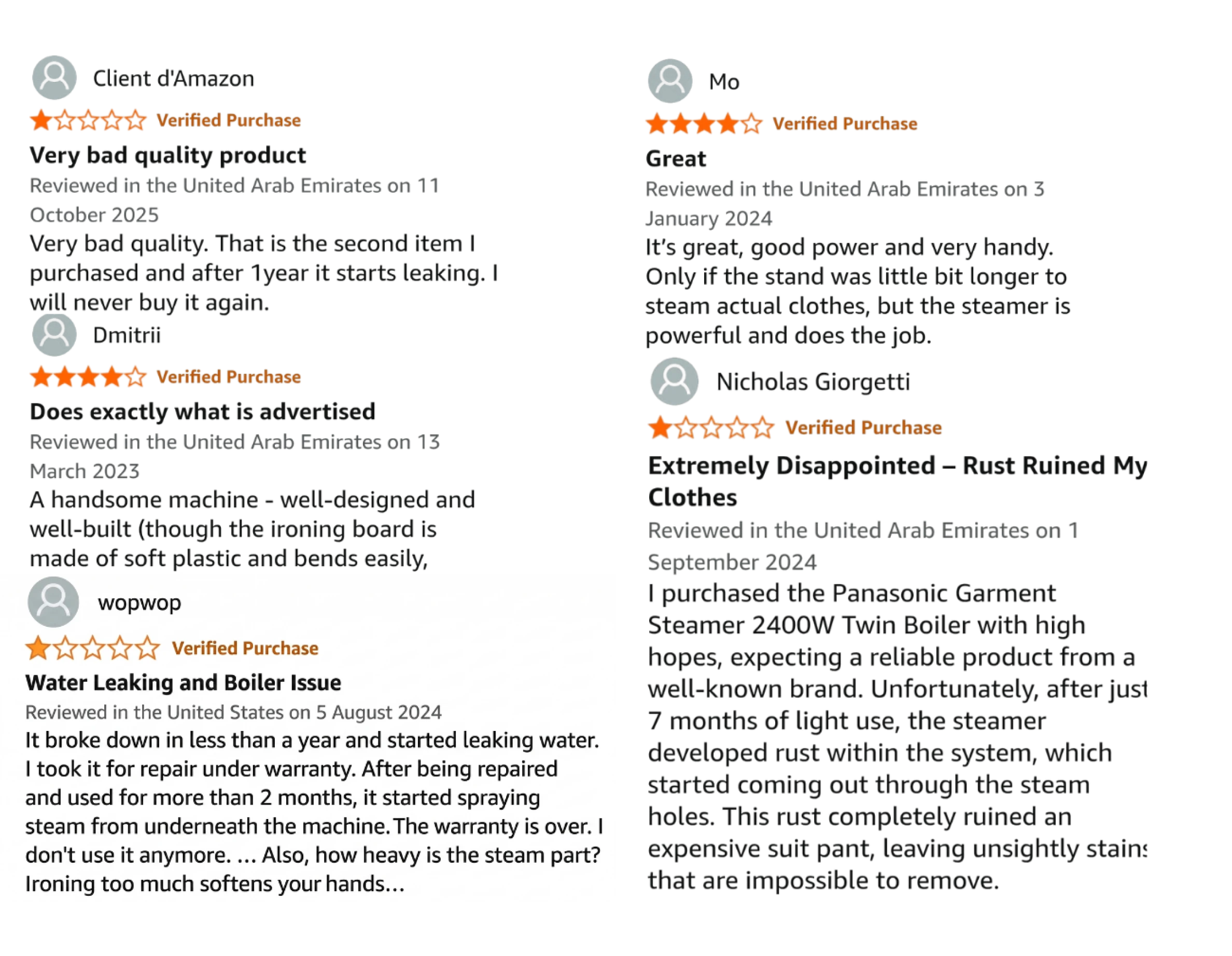
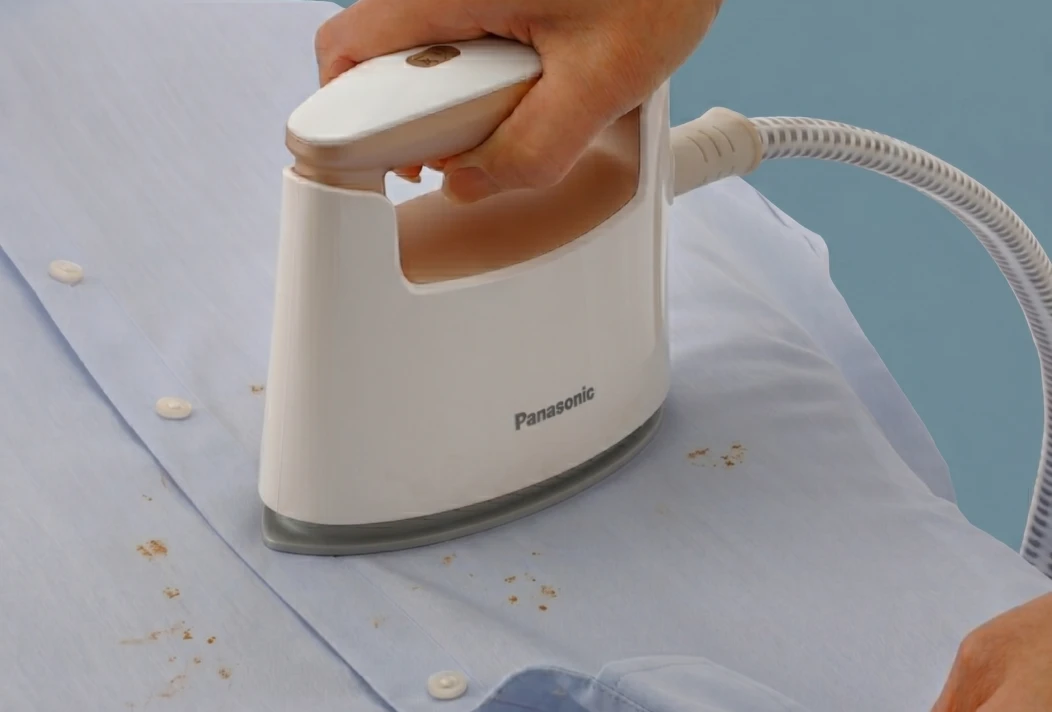
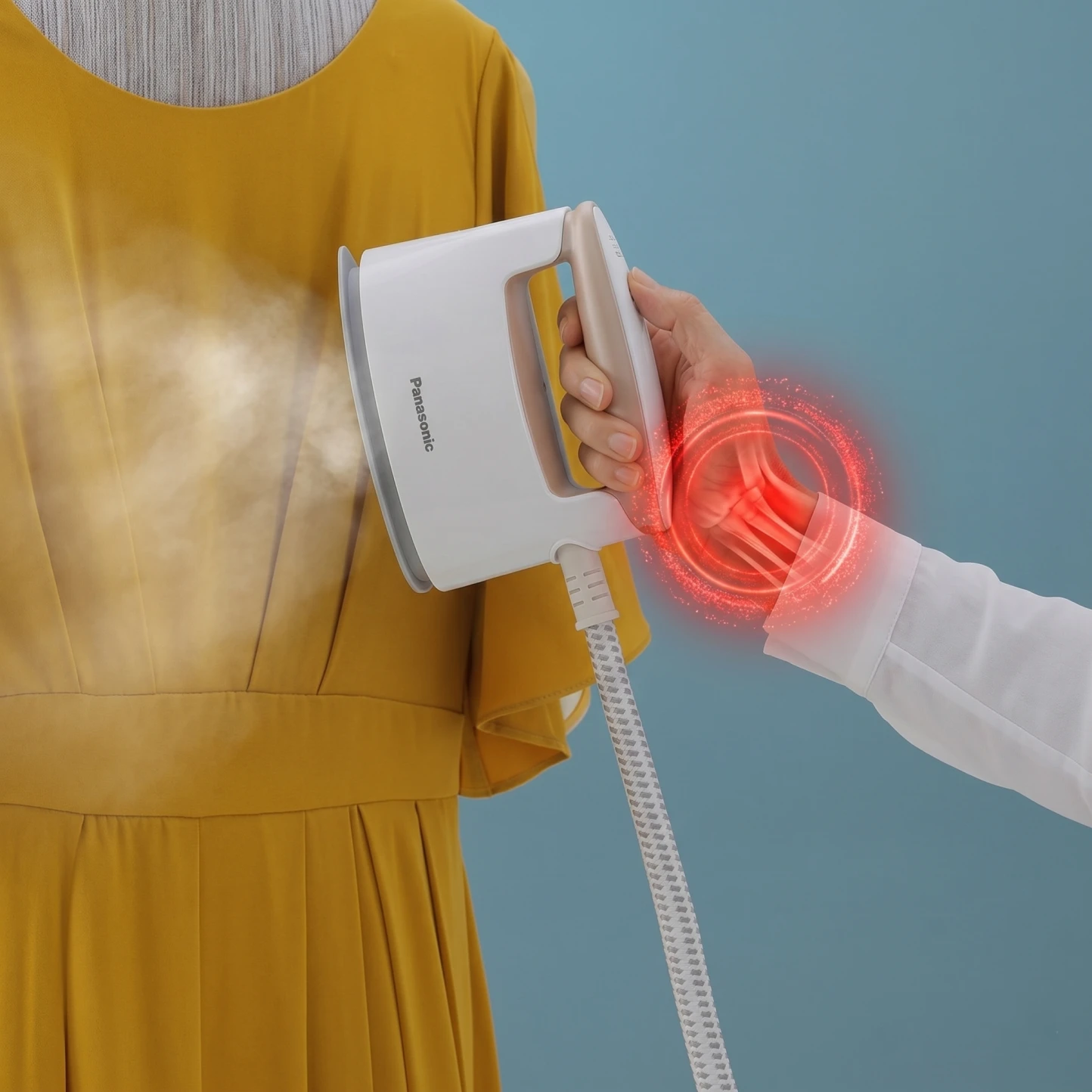
Global user reviews were analyzed to pinpoint four critical failure areas:
Internal Corrosion
"Twin Boiler" system remains damp, leading to rust stains on garments.
Ergonomic Fatigue
The cast aluminum heater in the iron head causes excessive weight.
Board Limitations
Soft and dimensionally insufficient ironing board.

Redesign Strategy
The project utilized specific Panasonic brand tactics:
Technological Shift
Transitioning from single to twin-boiler logic while correcting heat management.
Interface Adaptation
Moving controls from the body to the head for "Mechanical Comfort".
Volume Reduction
Shrinking the form factor to reduce user fatigue.
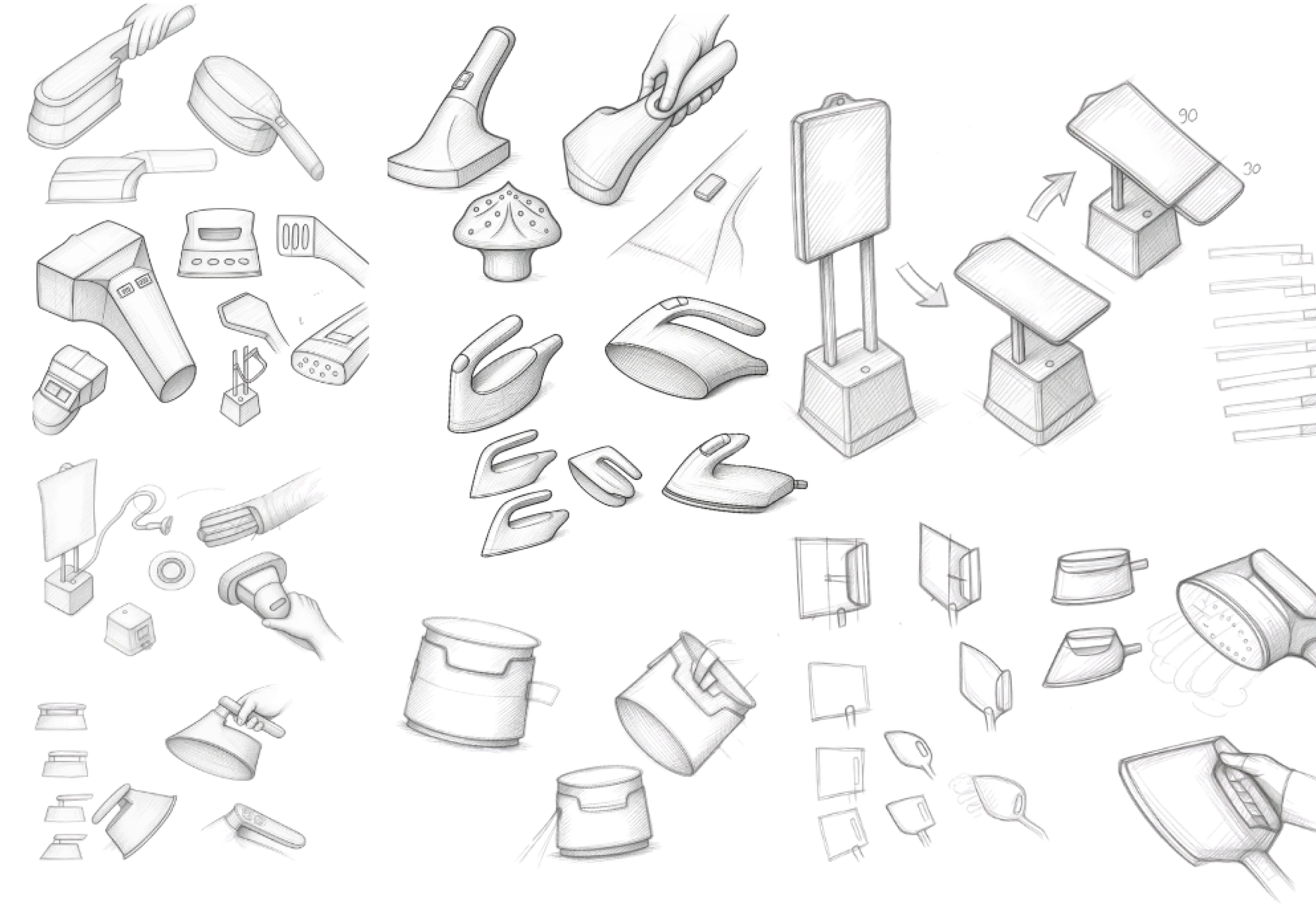
Sketching with Purpose
The ideation phase focused on applying the "Volume Reduction" tactic. Extensive sketches explored various form factors for the iron head to accommodate the internal heating system while providing a more natural grip angle.
Weight Distribution
Form search focused on balancing the internal components to minimize wrist strain.
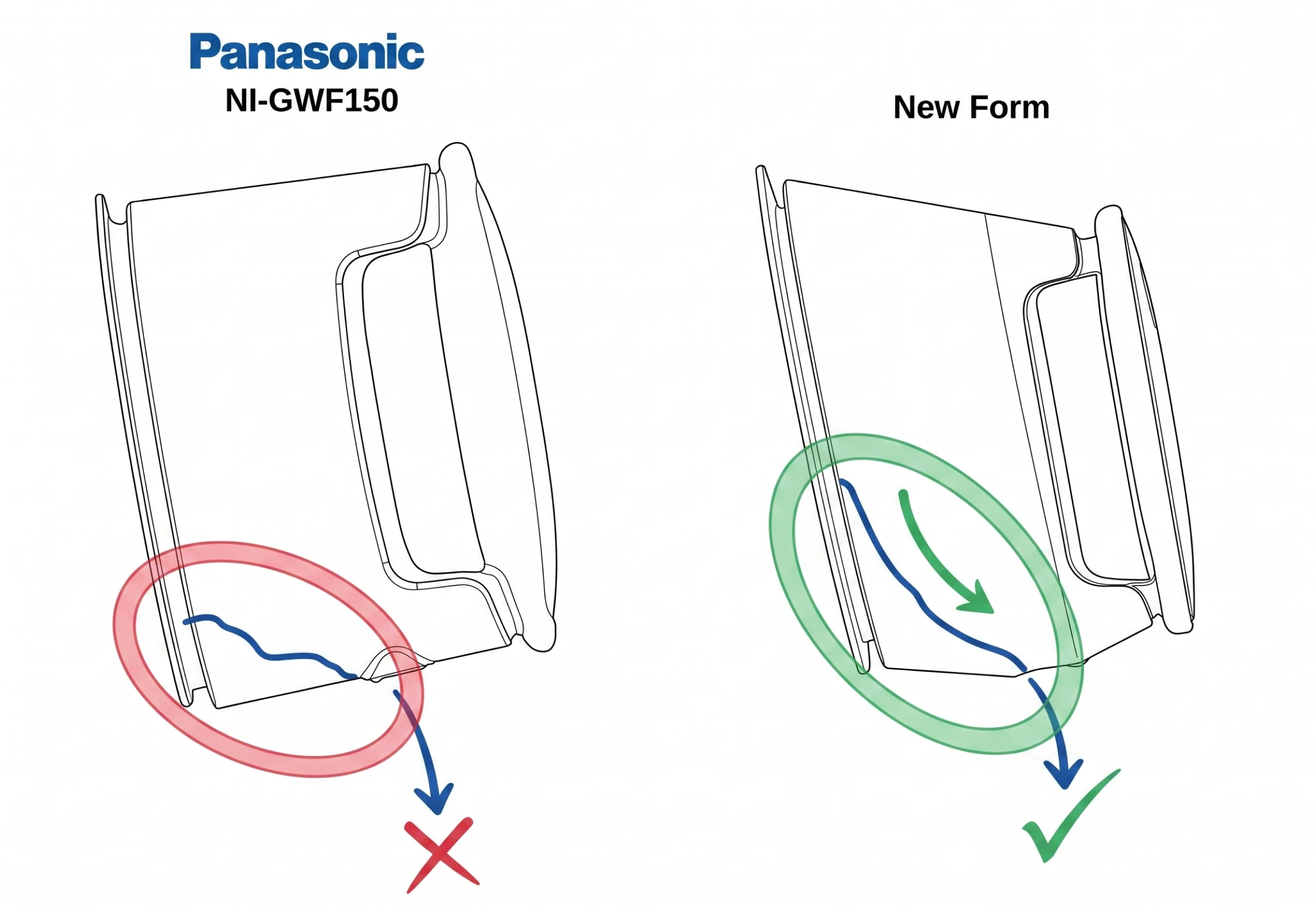
Internal Geometry Fix
Sketches included new internal flow paths designed to prevent water pooling, the primary cause of rust.
02RESULT
Go back to processRedesign Phase
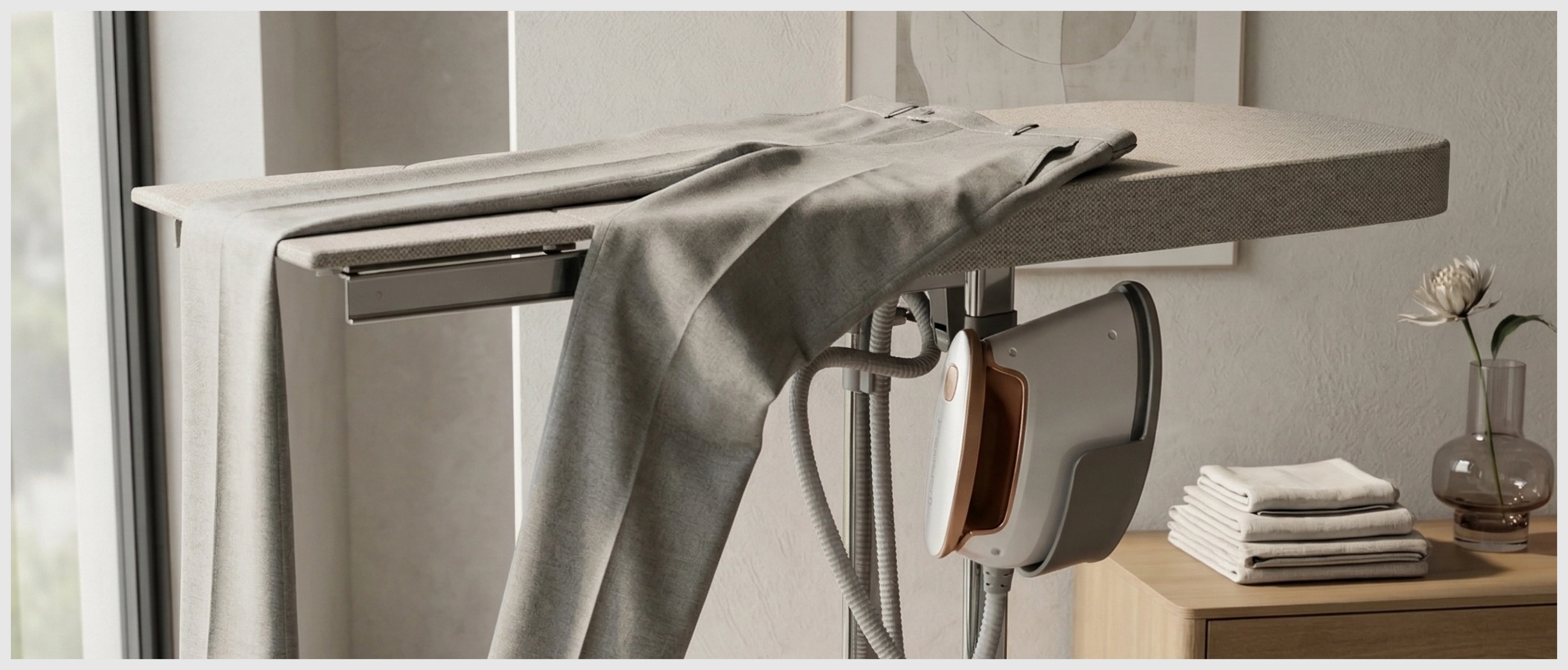
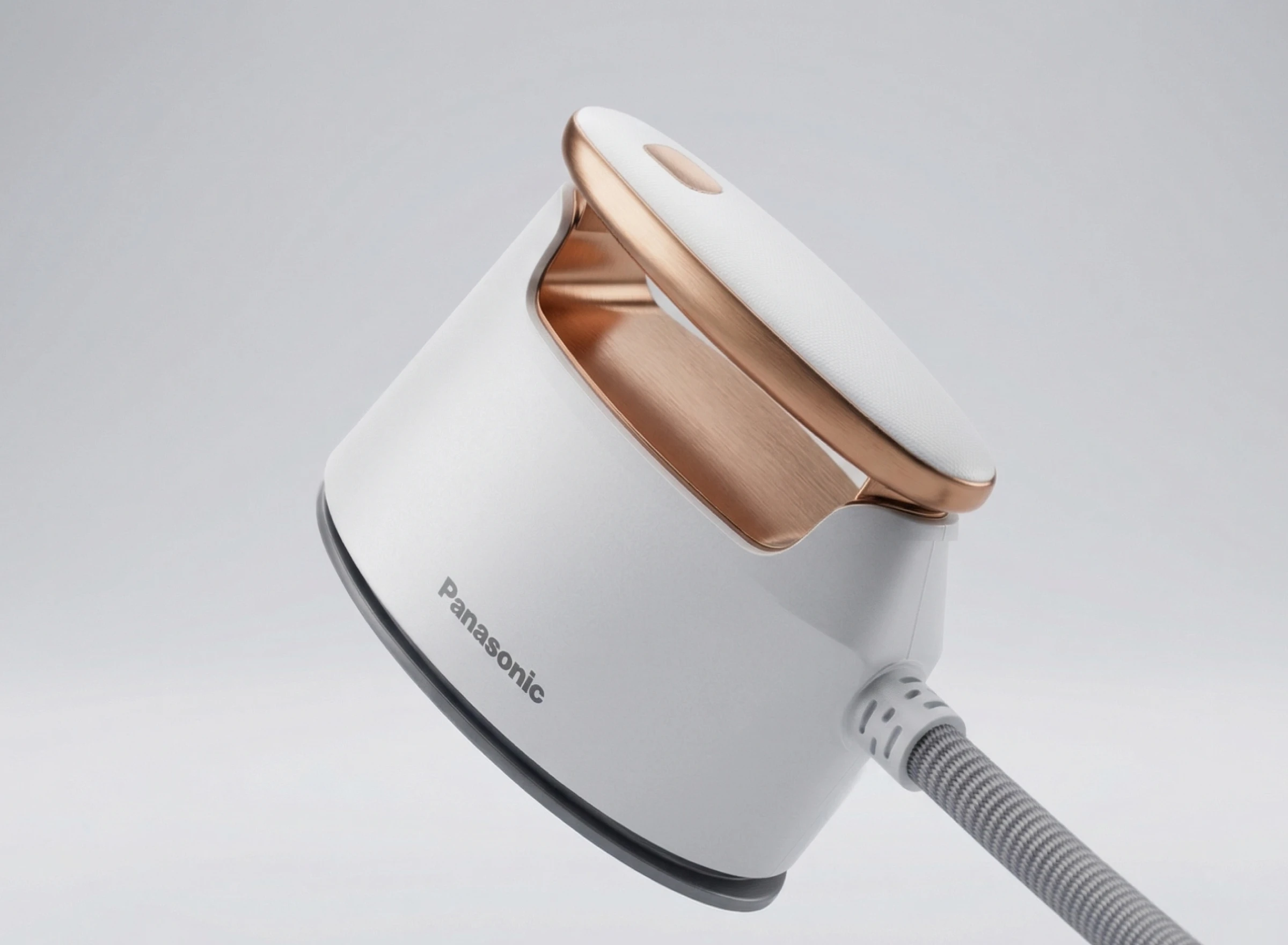
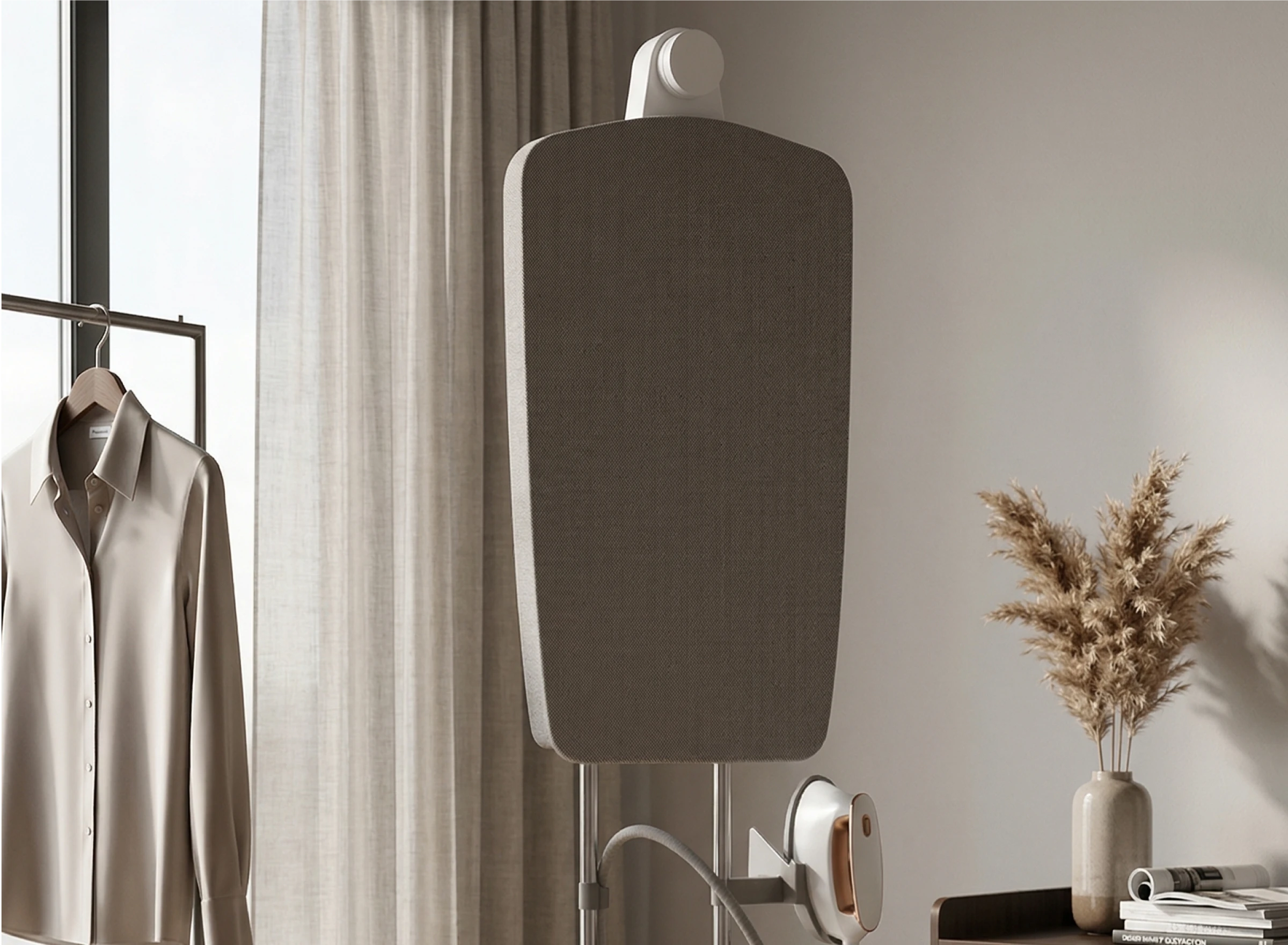
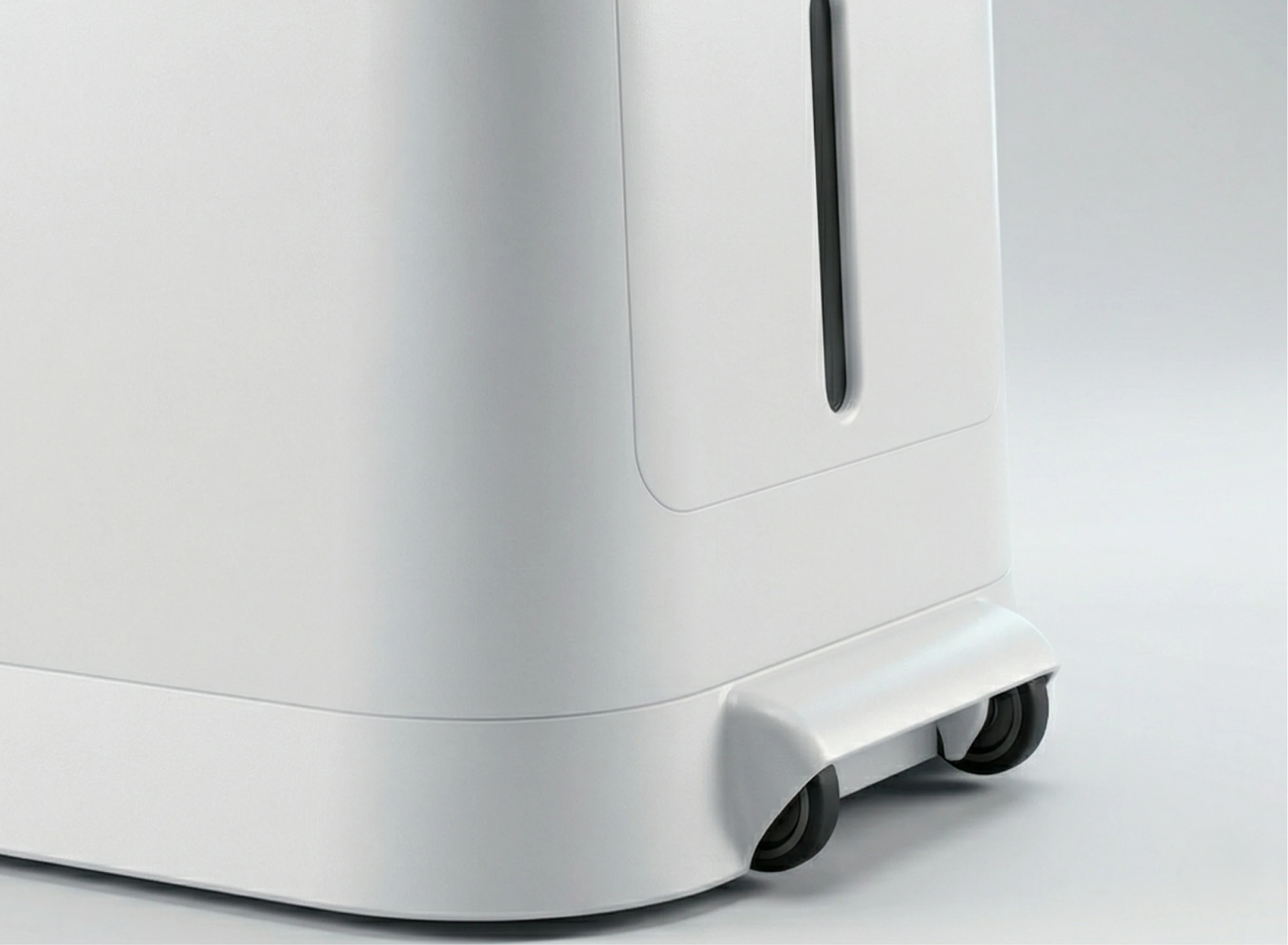
The redesign process does more than just improve the product visually. It modernizes the entire system through user-centric innovation: translating raw garment care functionality into an advanced conceptual mechanism, an ergonomically reduced iron head, and a premium material language.
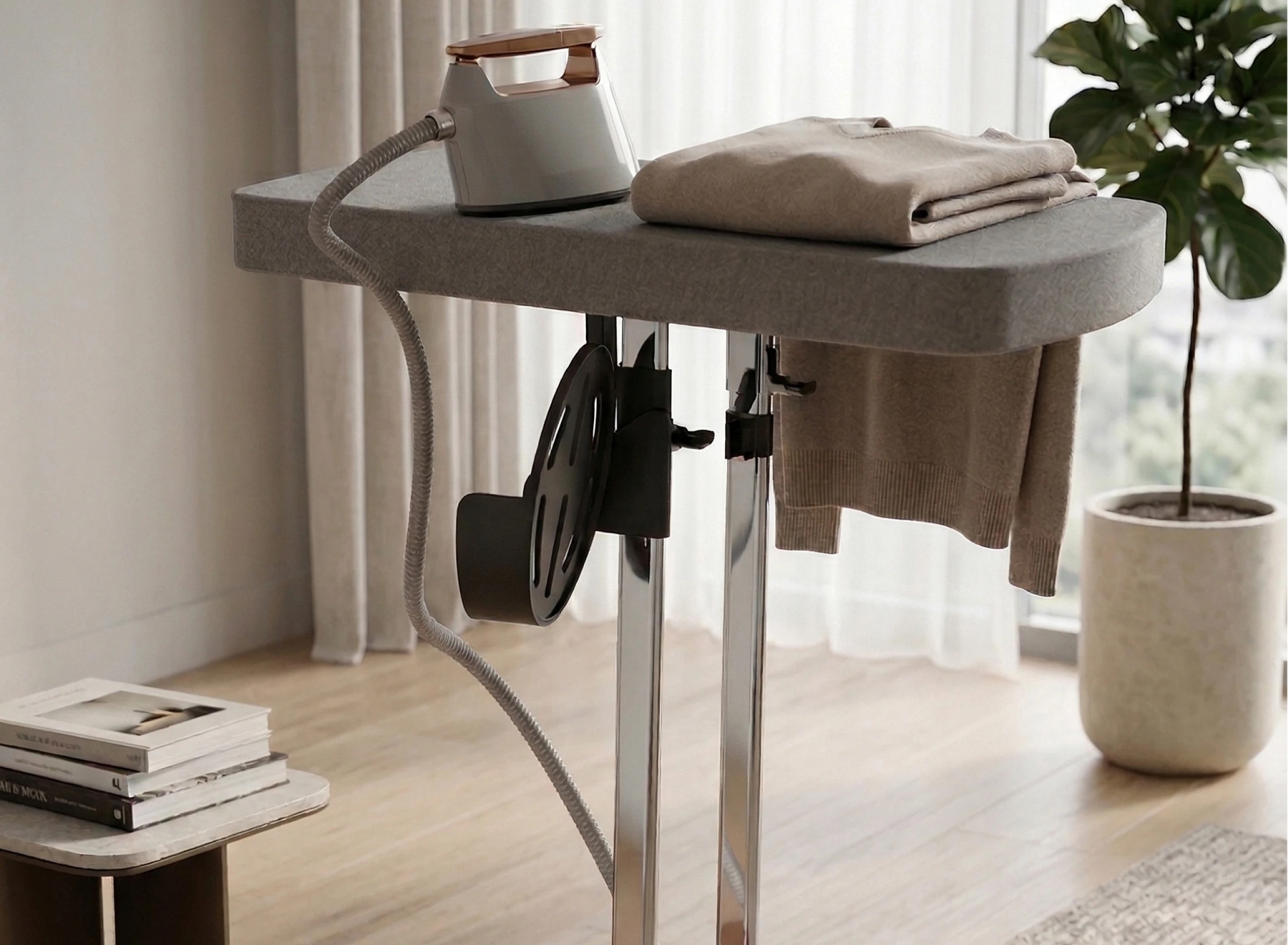
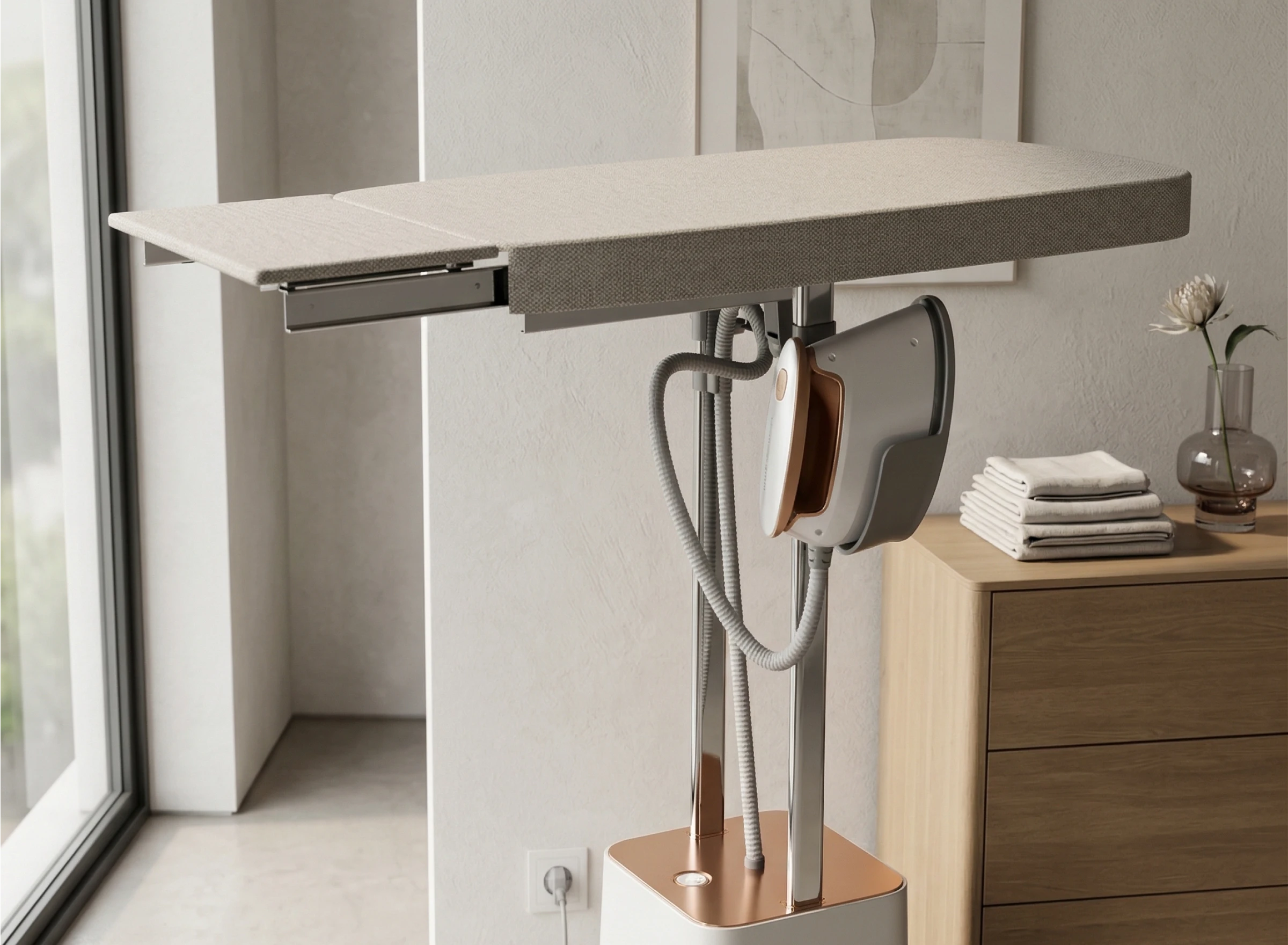
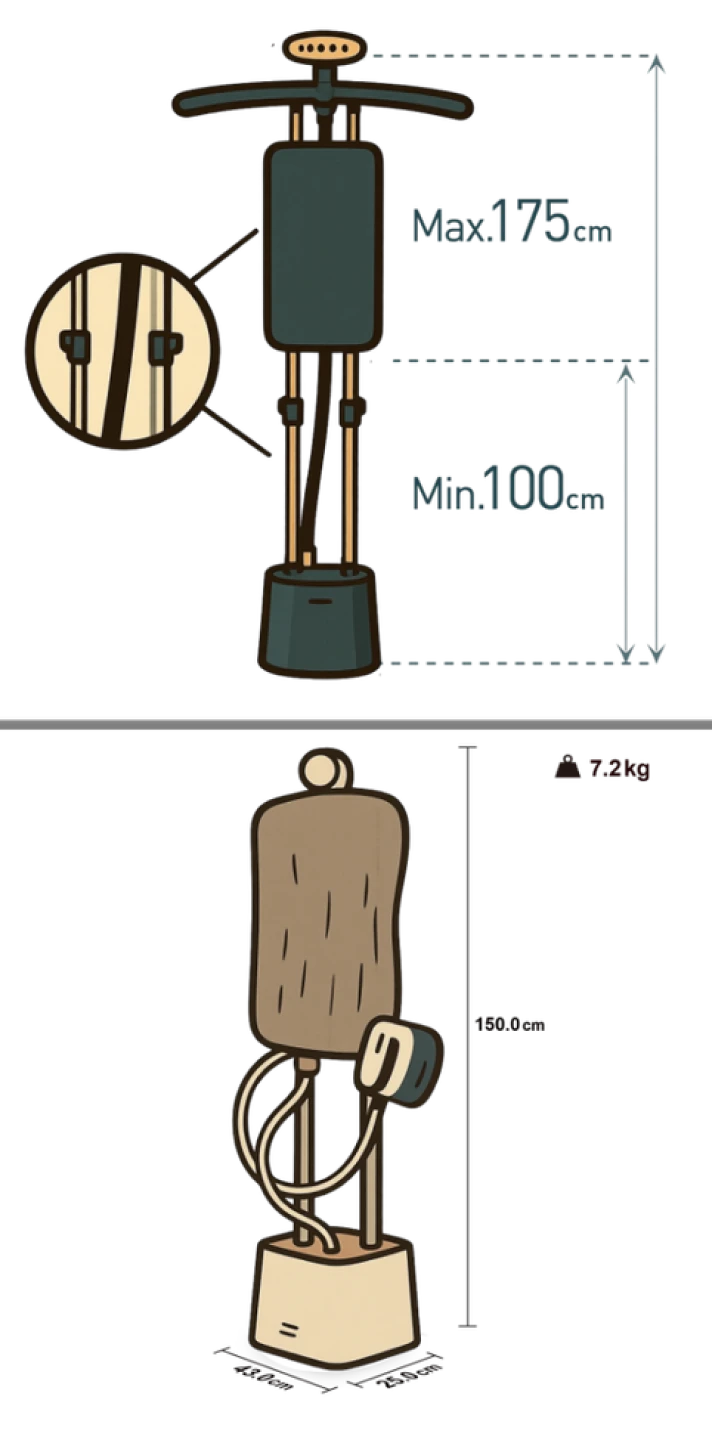
Revolutionary Ironing Board
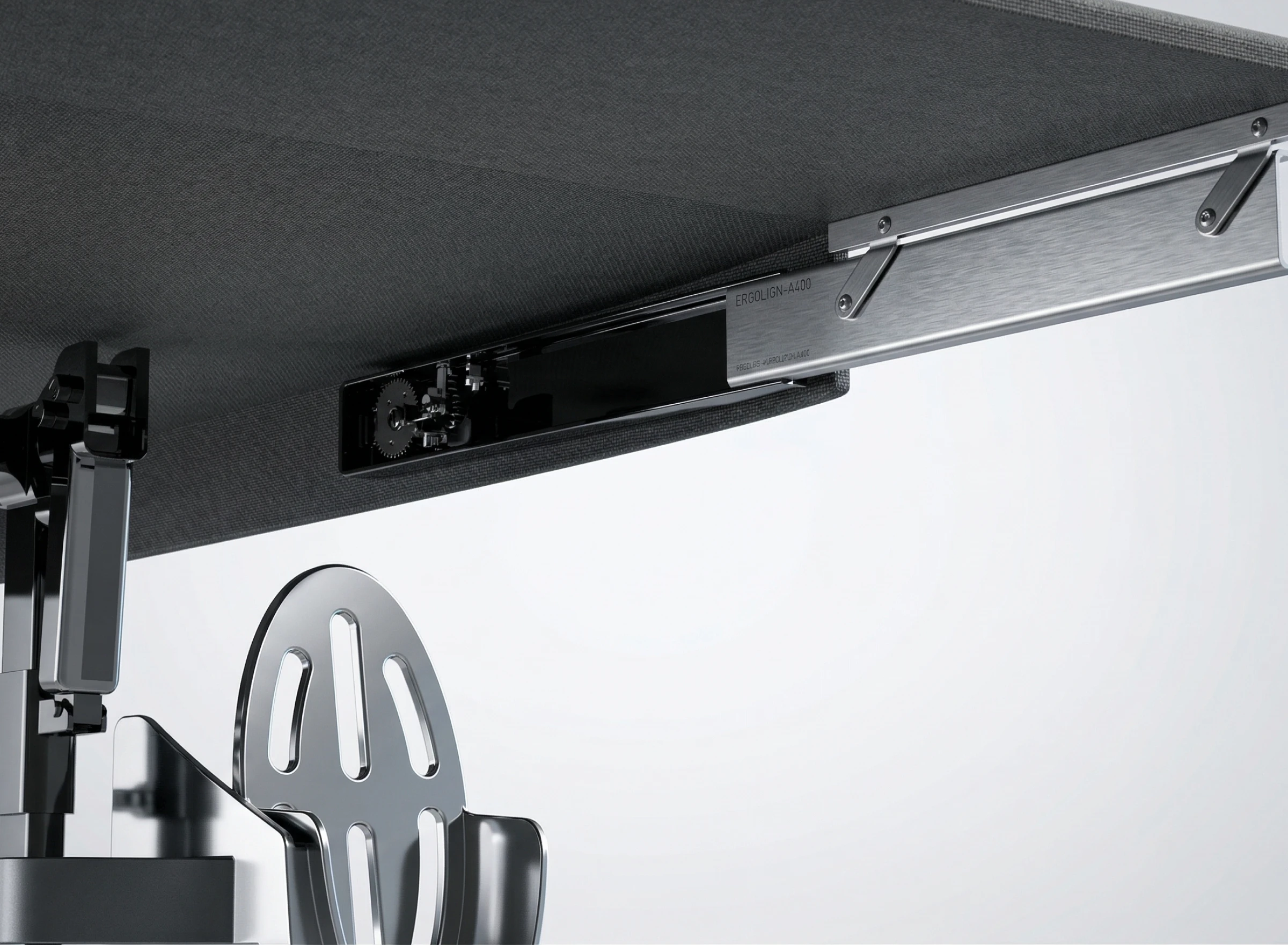
Horizontal Expansion: To solve the size limitation identified in user research, an innovative sliding mechanism was introduced, allowing the board to extend horizontally for long garments like trousers.
Intuitive User Experience
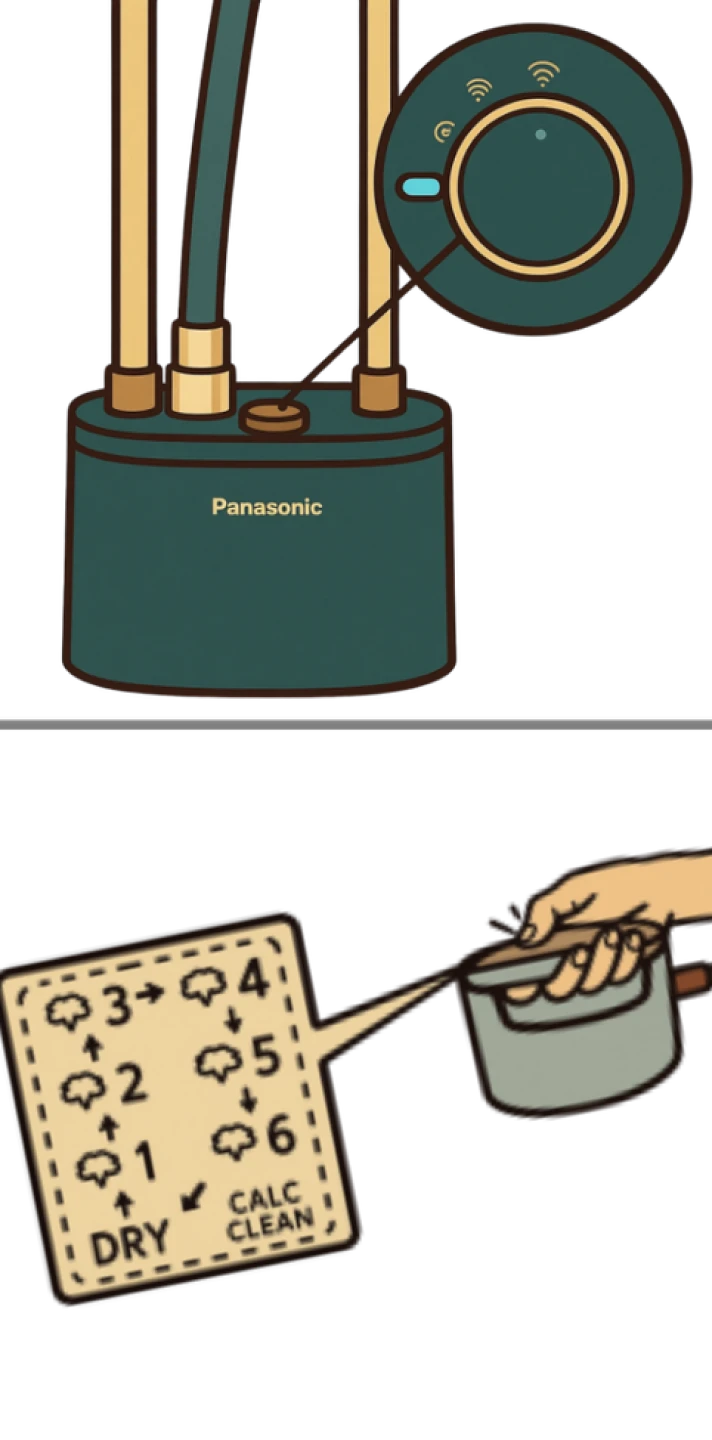
Smart Screen
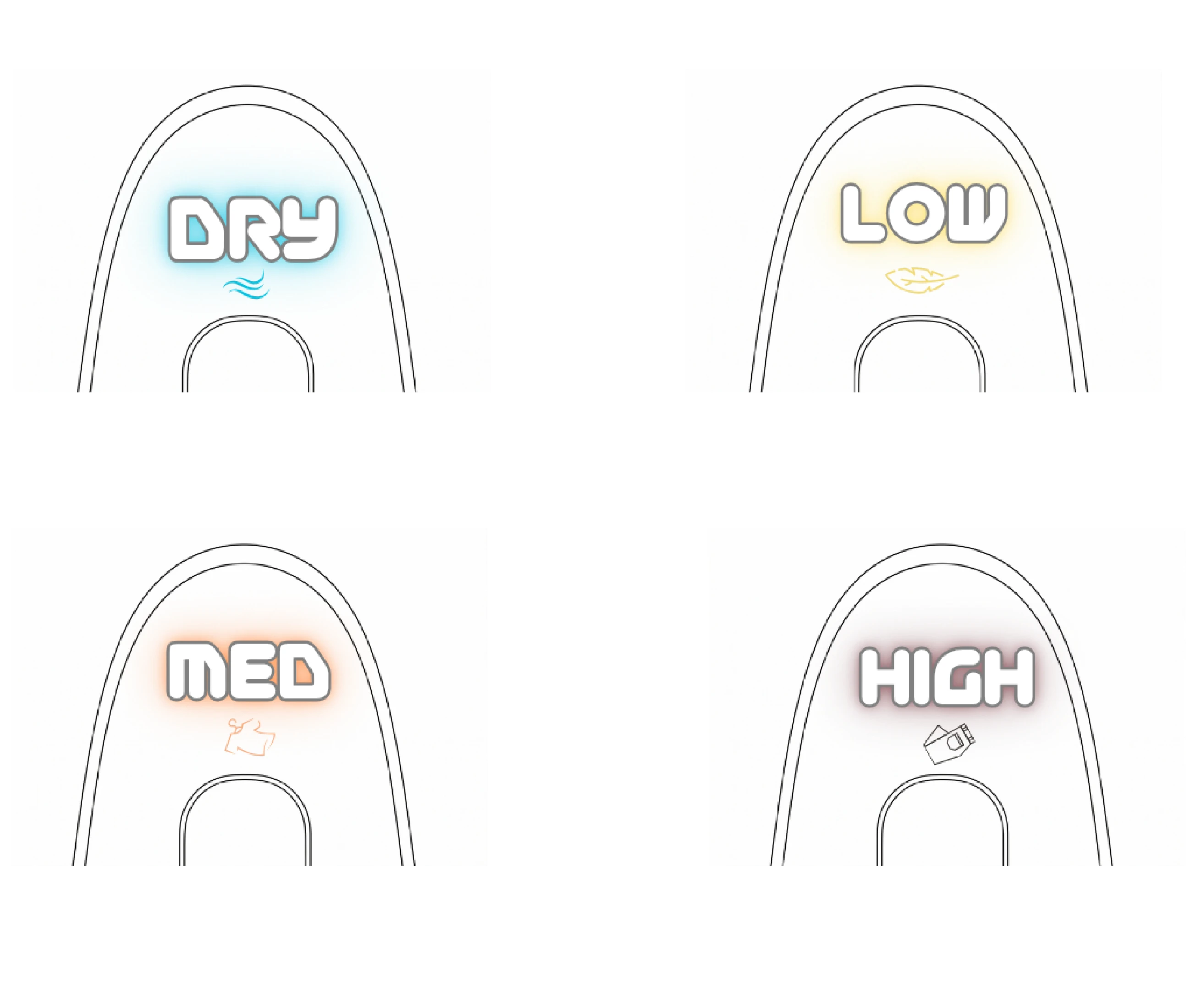
A simplified hidden display was integrated into the front handle to provide the user with a curated UI interface that only appears when active.
LED & Icon Feedback
Minimalist UI icons paired with custom illuminated color (Dry, Low, Med, High) provide instant status updates. This specific color-coding maximizes visibility while maintaining the brand's signature clean aesthetics without visual clutter.
Premium Material Identity
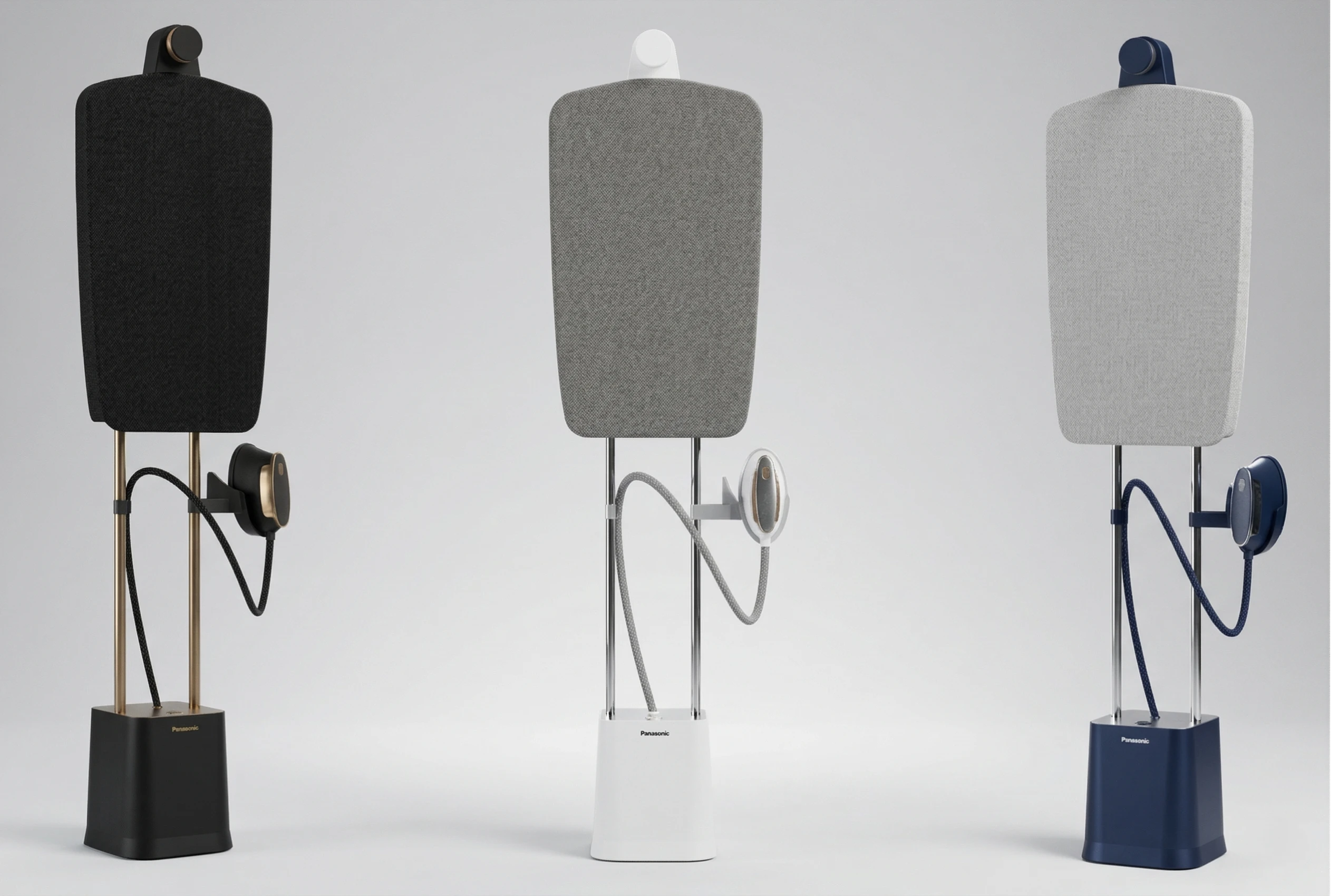
Sophisticated Finishes: The product moves away from low-cost glossy white plastics, adopting a premium color palette with bronze metallic details and high-quality fabric textures.
Home Integration: This new CMF strategy ensures the device complements modern interior design instead of being hidden as a utilitarian tool.
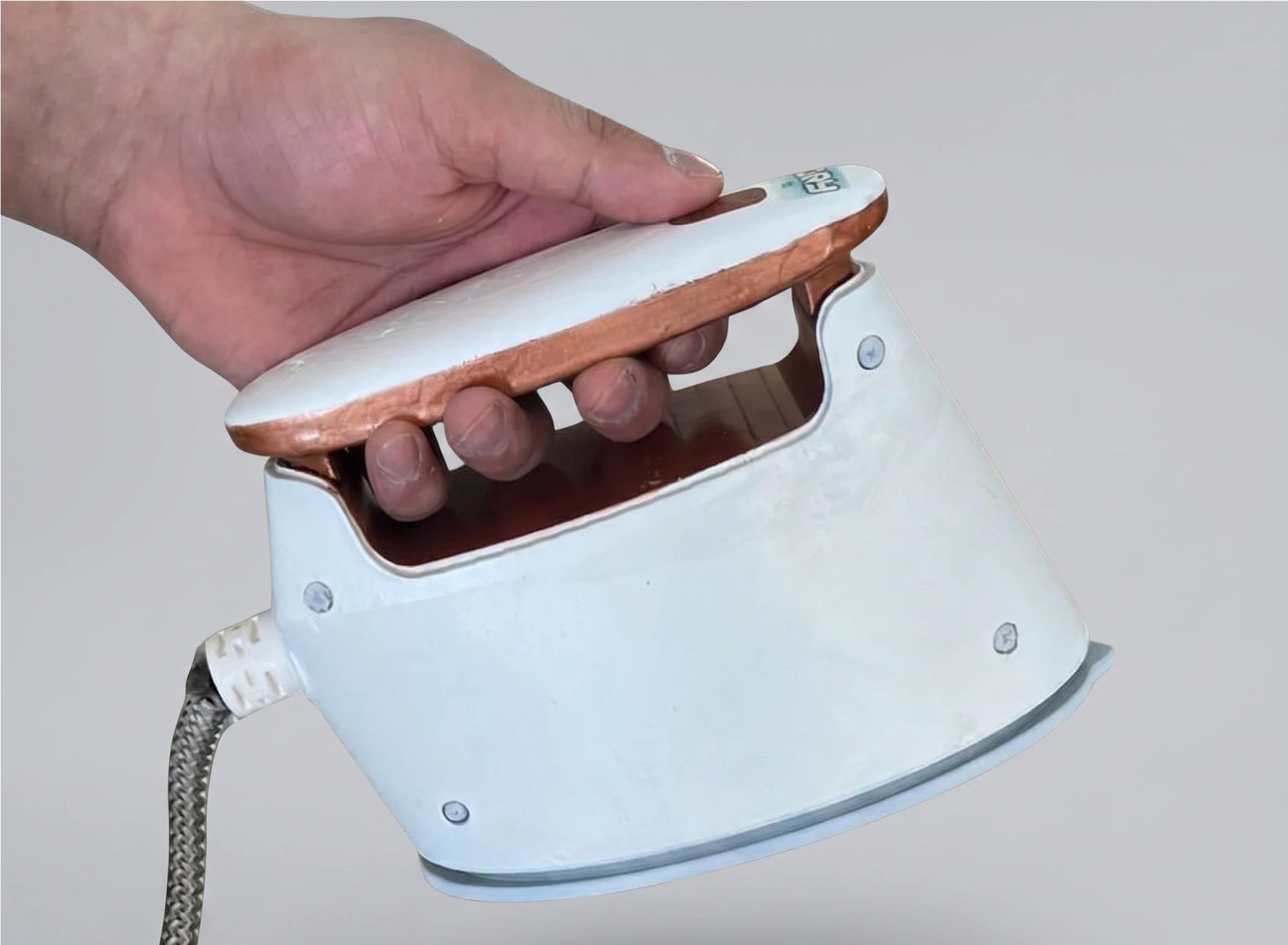
Ergonomic Mockups
To verify the form search digitally, 1:1 scale foam and cardboard mockups of the iron head were created. This hands-on prototyping confirmed the tactile comfort of the reduced volume and validated the new handle geometry before final CAD production.
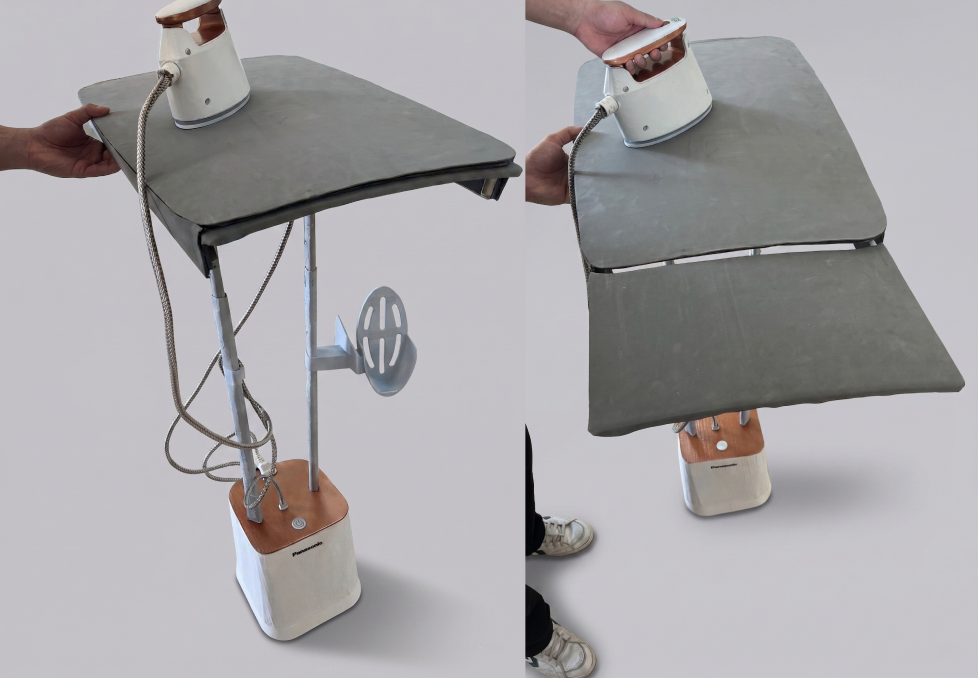
Validating the Expanding Board
One of the most significant mechanical additions was the horizontally expanding board mechanism, designed to handle long garments like trousers.
Cardboard Mockup: This sliding action architecture was validated through functional cardboard prototypes to ensure dimension stability and user safety.