GREENNEX
A standalone, oxygen-producing street light ecosystem.
Design is more than a physical form; it is a reflection of the deep ecological and infrastructural bonds a city establishes with its inhabitants. Every streetlight we walk past in our daily lives—often without conscious thought—carries the potential to do more than simply consume energy and occupy space. This project aims to decode the passive nature of city streets and synthesize biotechnology with industrial design into a single, living form.
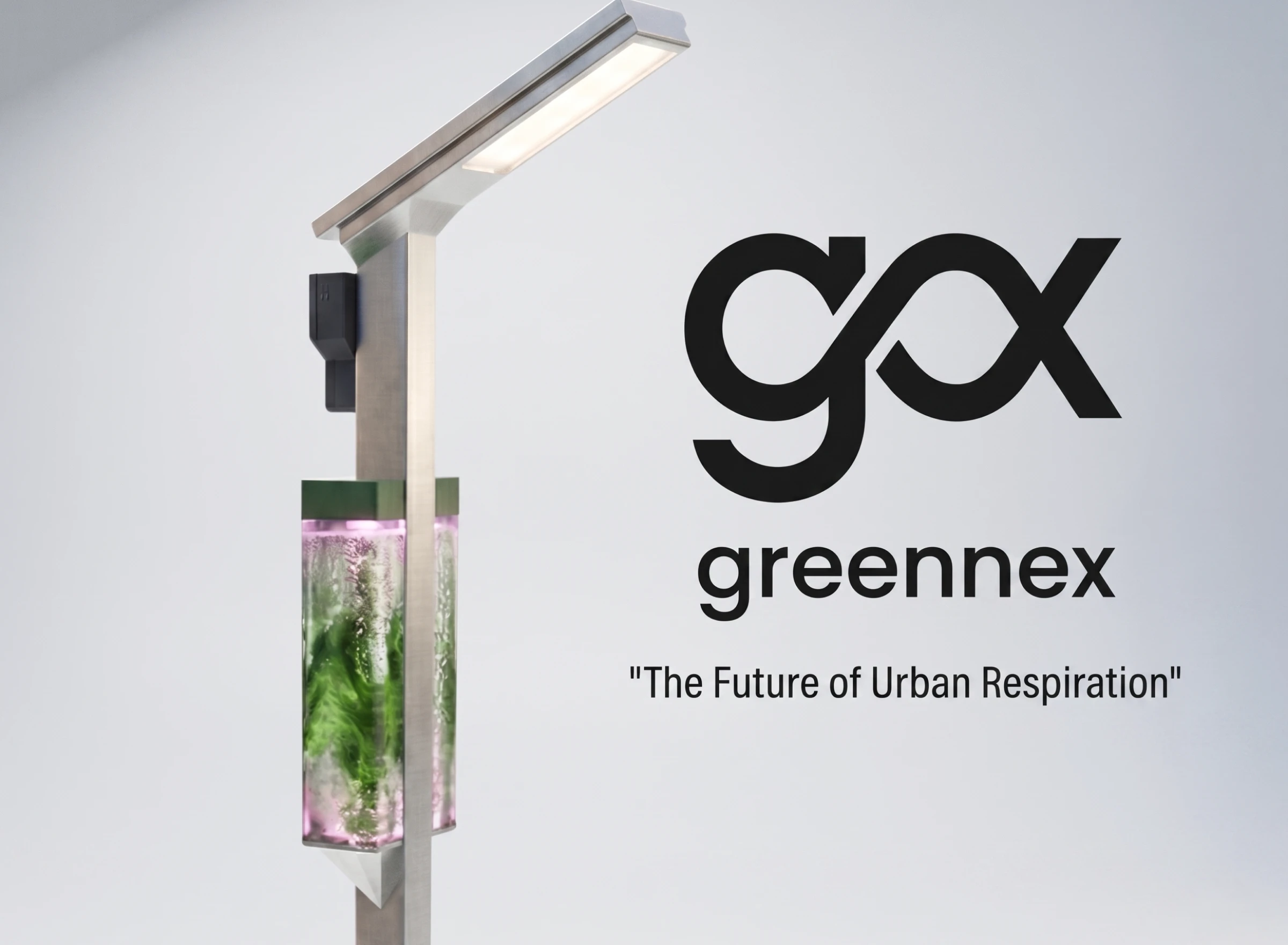
Greennex is a conceptual urban ecosystem born from this exploration. By its very nature, a traditional streetlamp remains incomplete; it attains its true purpose only when it gives back to the environment it illuminates. This conceptual journey—redefining cold, recycled chrome through the breathing, oxygen-producing vitality of microalgae—transforms a basic civic utility into a resilient, freestanding biological asset.

Technical System Architecture
3D CAD Modeling
Rendering
Bio-Design Integration
Systems Architecture
Concept Design
01PROCESS
Go to resultBackground
The "Design the Sustainable Future" competition by Rönesans Holding called for innovative, holistic concepts that address pressing ecological crises. The brief expected us to look beyond conventional sustainability and propose a systemic urban solution that actively reduces carbon footprints while integrating seamlessly into daily city life.

Form vs. Volume
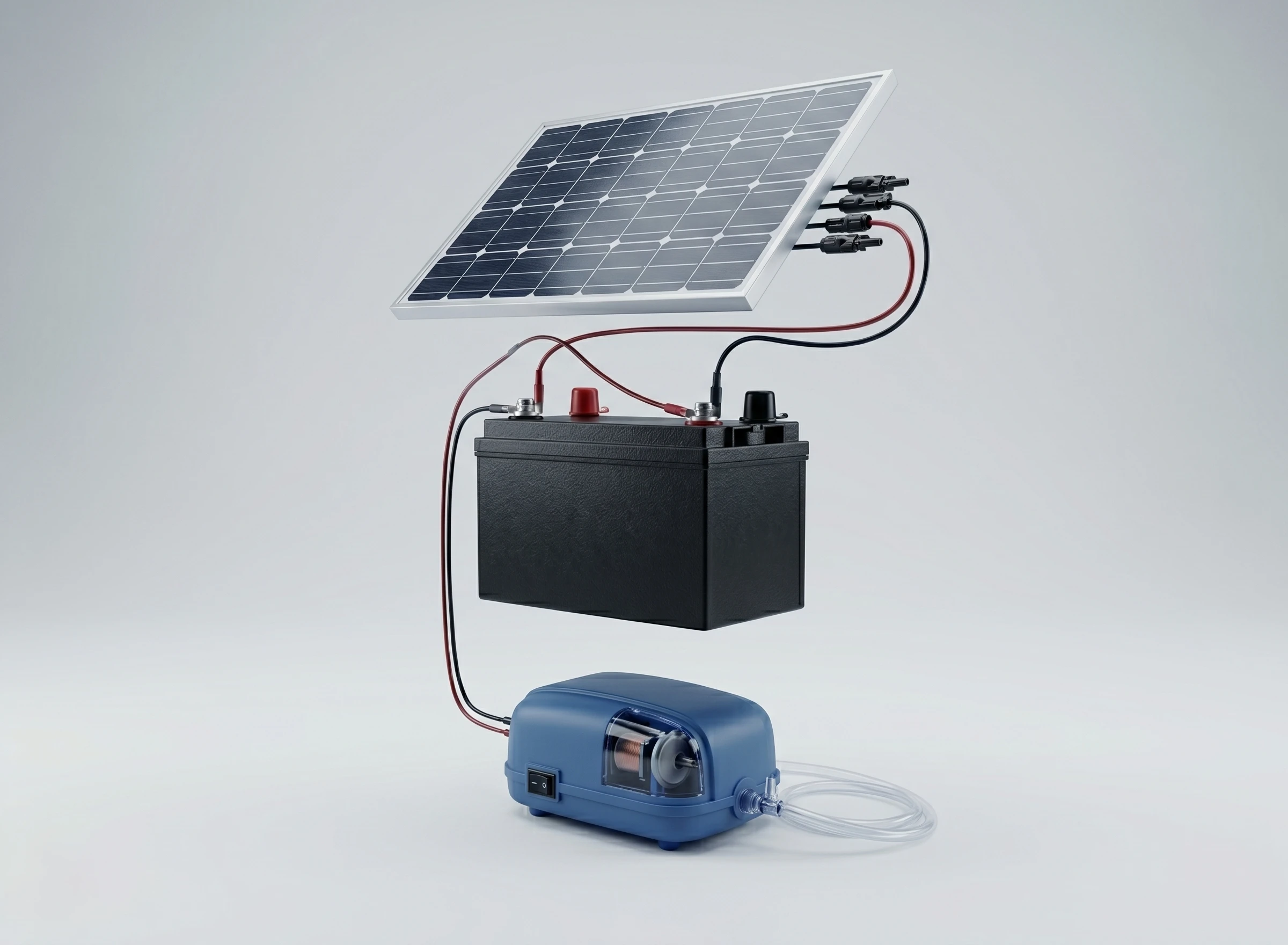
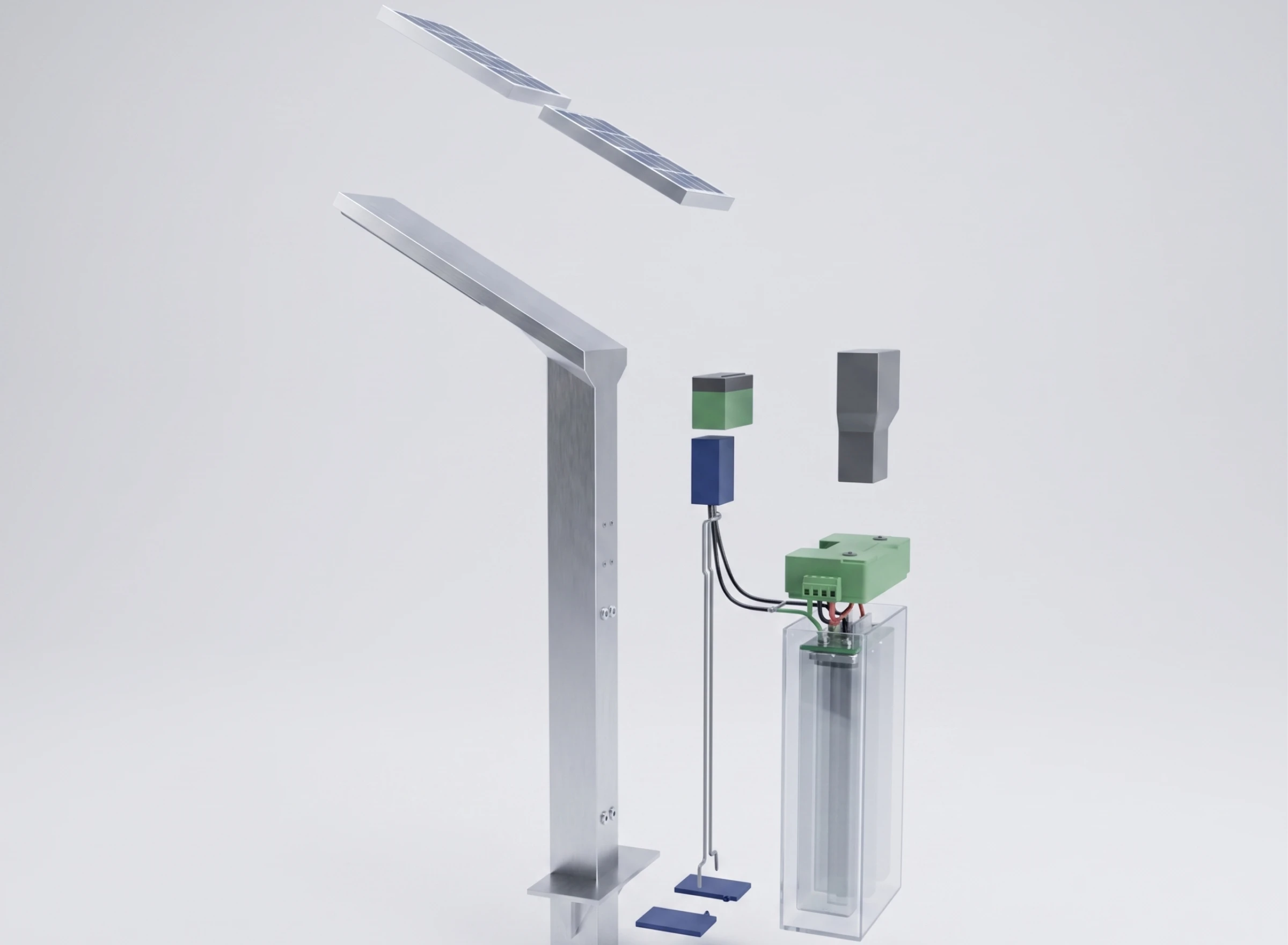
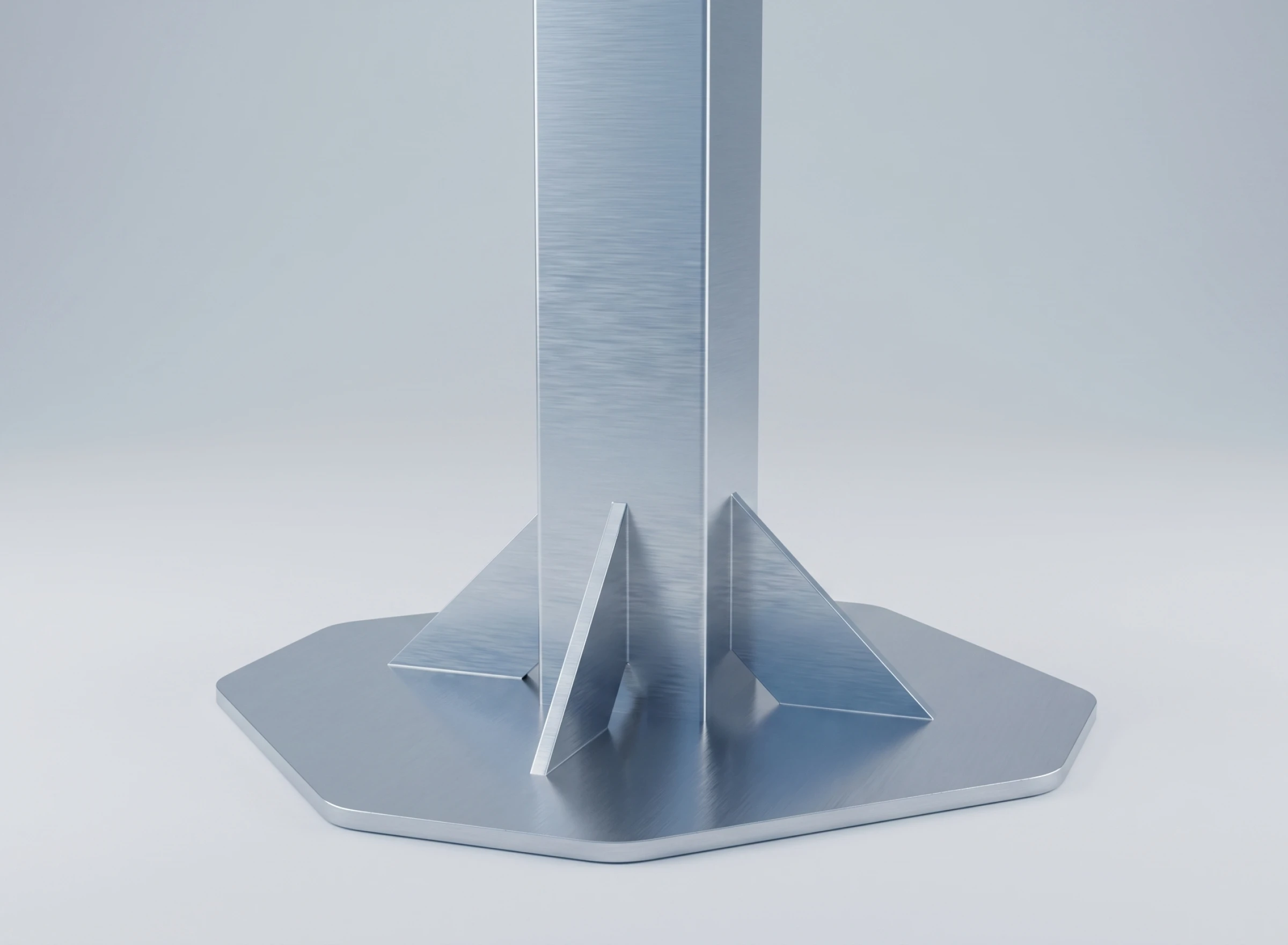
Integrating a bulky battery, air motor, and 20-liter tank without ruining the slender urban silhouette was a major packaging challenge. Through multiple CAD iterations, I engineered a central modular housing that safely isolates heavy electronics from moisture while maintaining the pole's strict center of gravity.
Routing the Internal Architecture
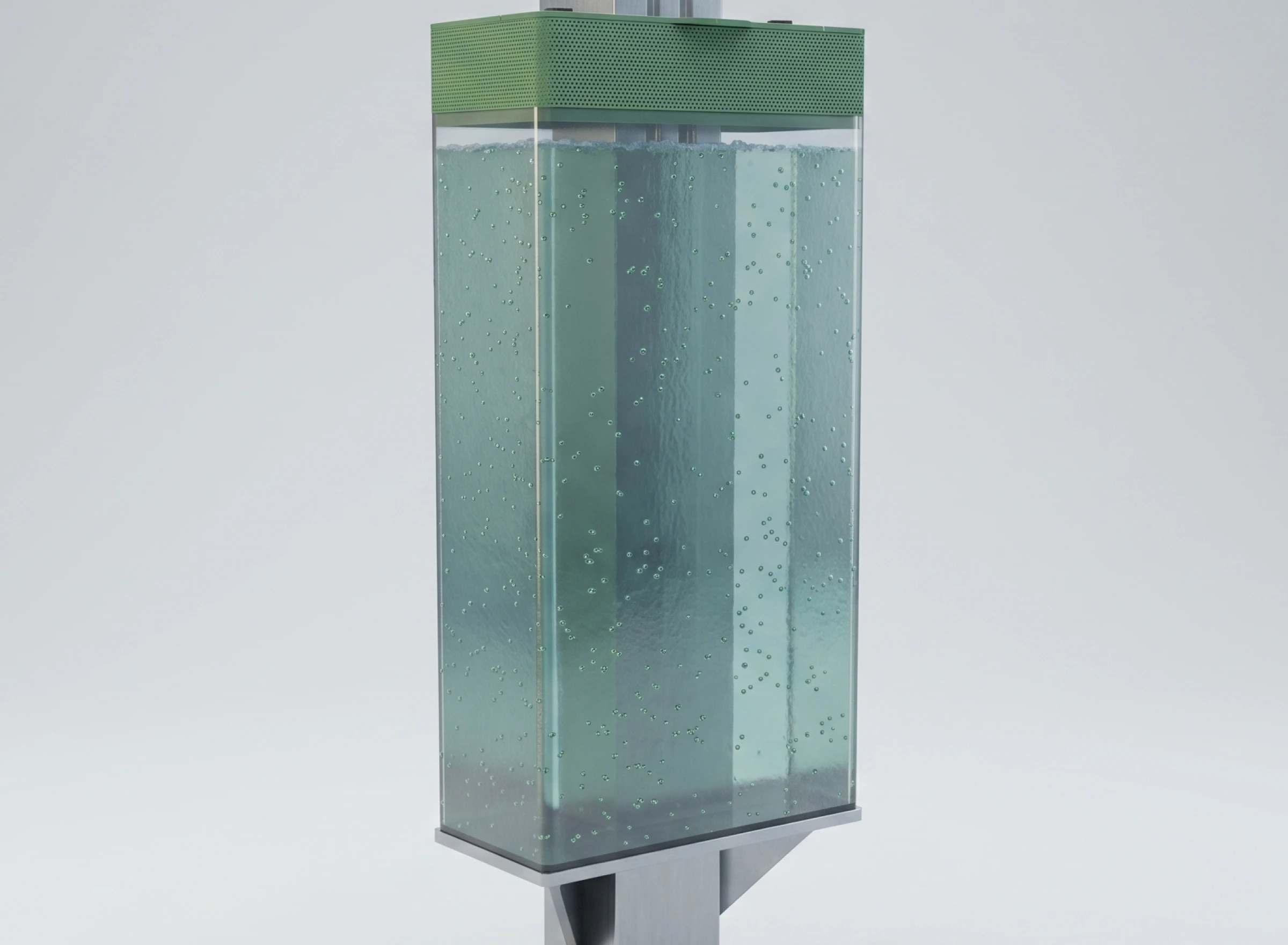
A photobioreactor requires continuous airflow to survive. I modeled precise internal pathways for silicone hoses to safely travel from the dry motor housing down to the algae tank. These rigorous 3D structural tests proved to the jury that the biological life-support system was fully manufacturable, not just a concept.
02RESULT
Go back to processOff-Grid Ecosystem
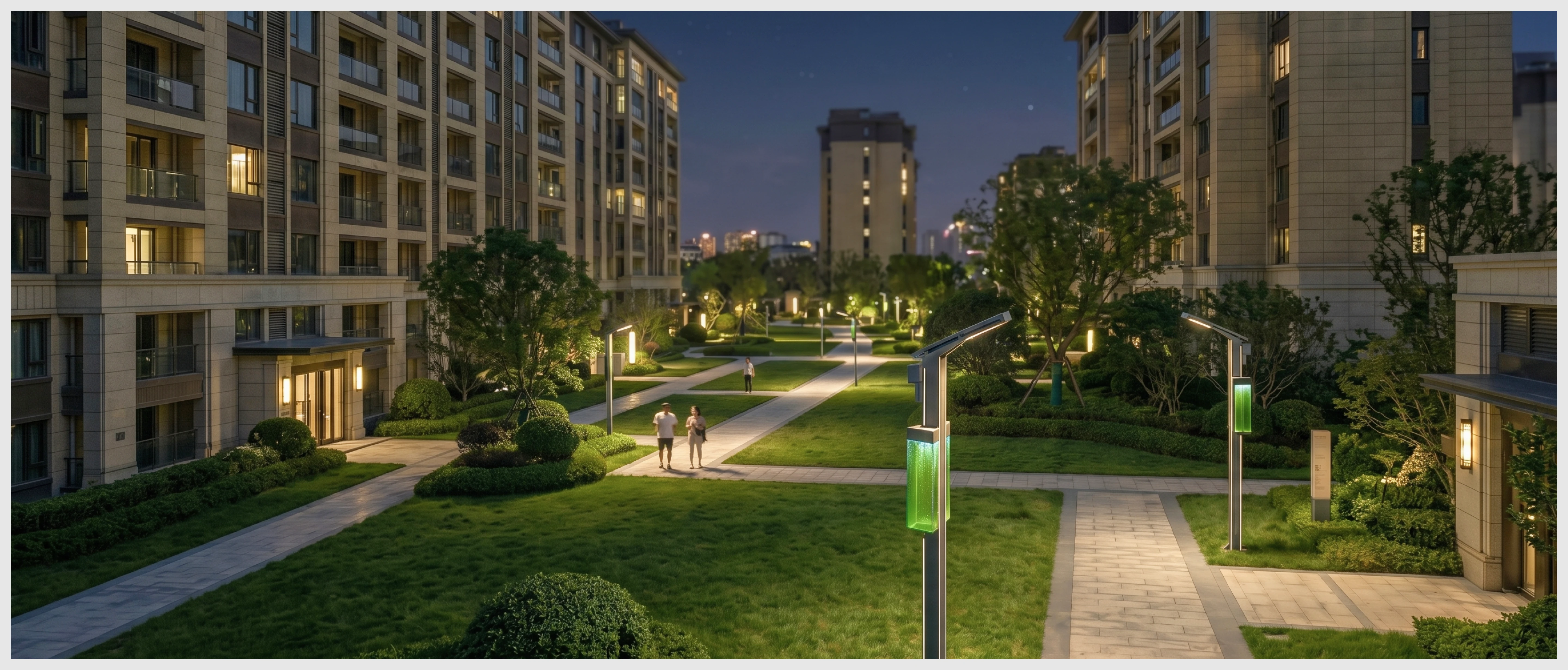
Greennex is a self-sustaining urban lighting pole. Powered exclusively by dual 10W solar panels, its concealed 12V battery and air motor run the 20L algae reactor continuously. It functions as a fully independent biological engine, requiring zero power from the city grid.
The S-Curve Efficiency
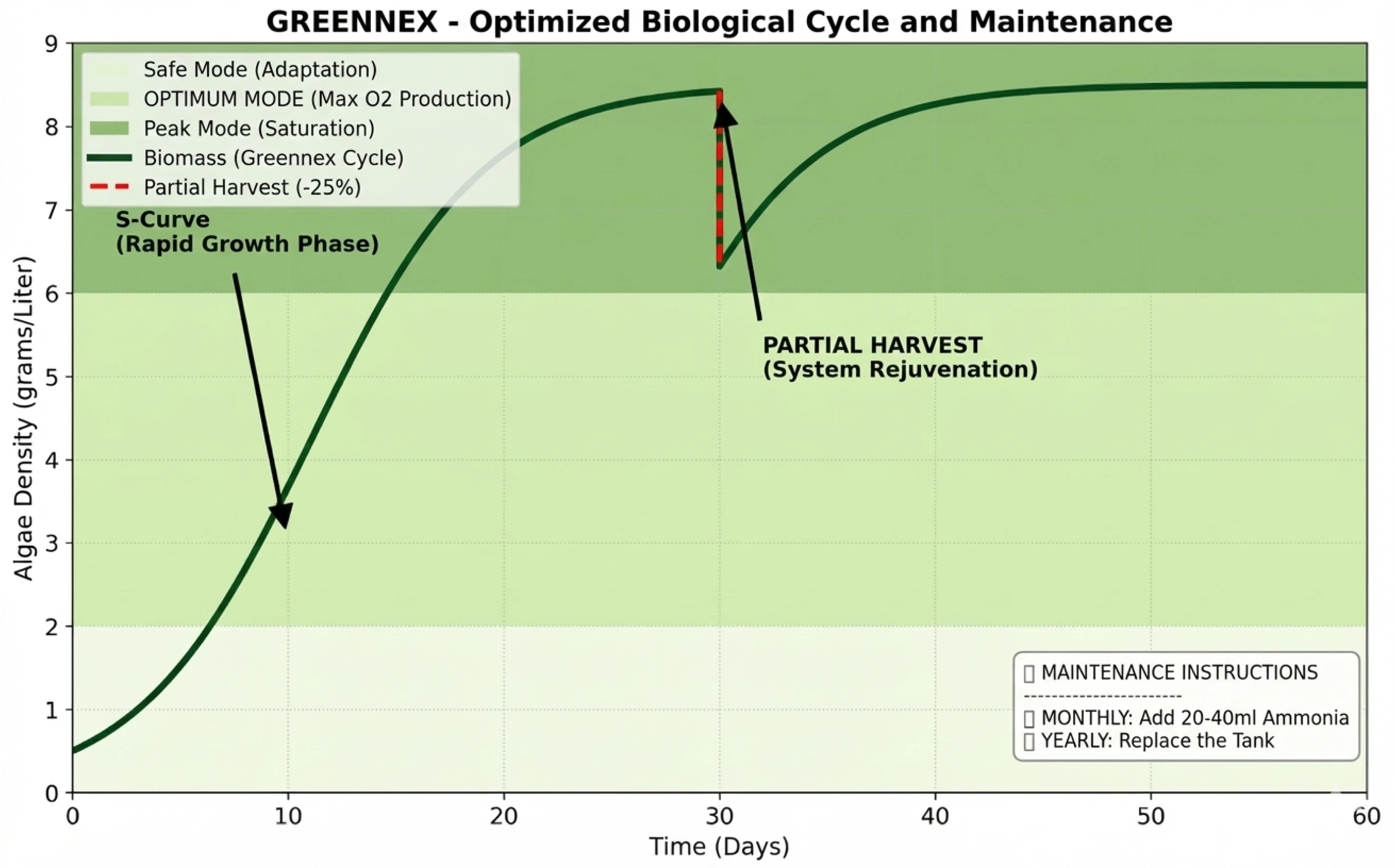
To maximize oxygen output, the Scenedesmus obliquus algae is kept in a constant state of rapid growth (the S-Curve). A strict maintenance cycle: a 25% partial harvest and monthly ammonia nutrients ensures the reactor permanently operates at peak ecological efficiency.
The Vertical Forest (Pilot)
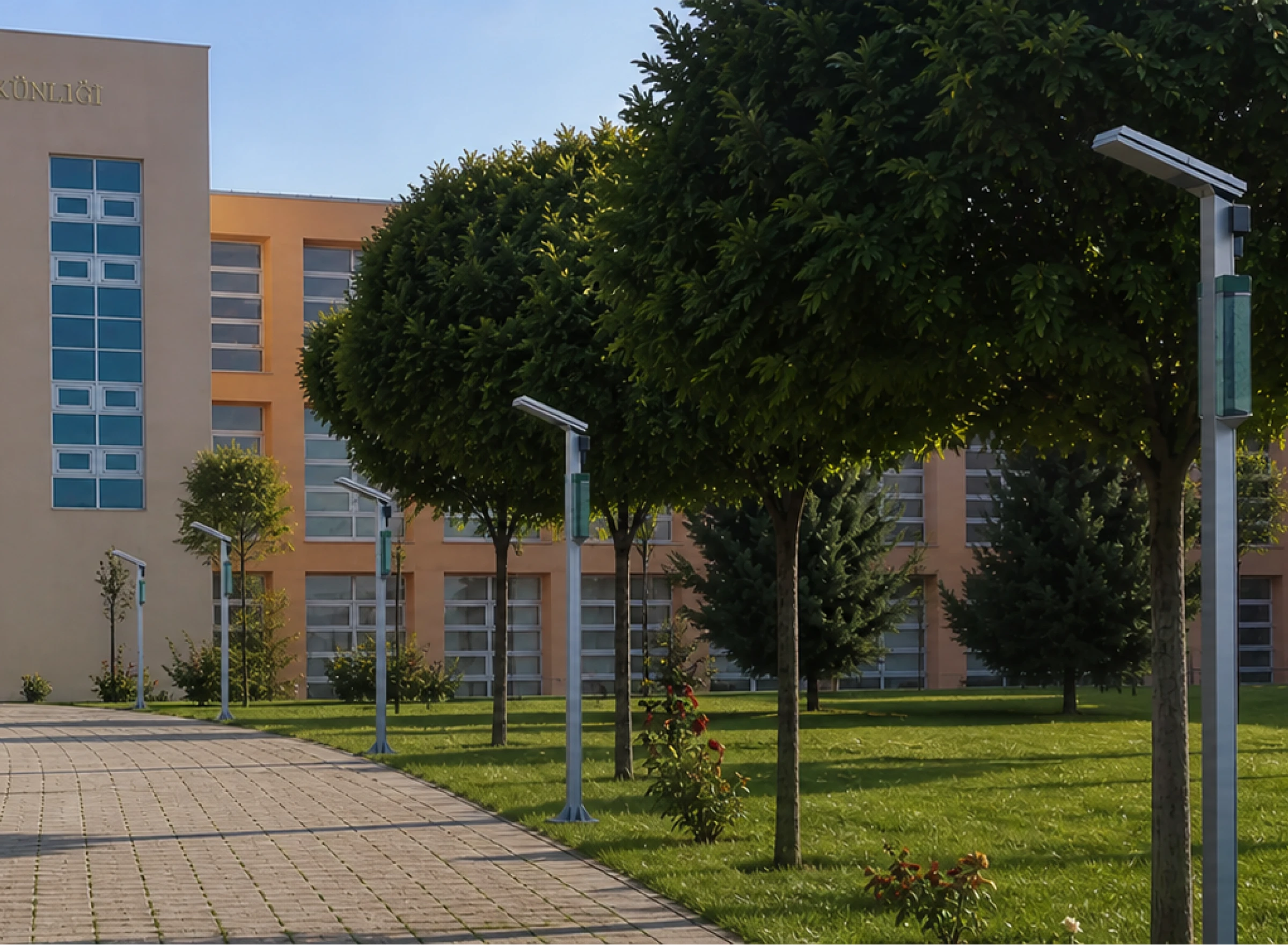
We mapped a 20-100 pole network for the ESOGÜ Campus. This decentralized forest projects a daily output of 14-20 m³ of oxygen (supporting 36 people). It actively cleans the air while reducing energy consumption by 80% compared to traditional lighting.